

Effective Strategies and Practical Tips for Stress-free Preparation
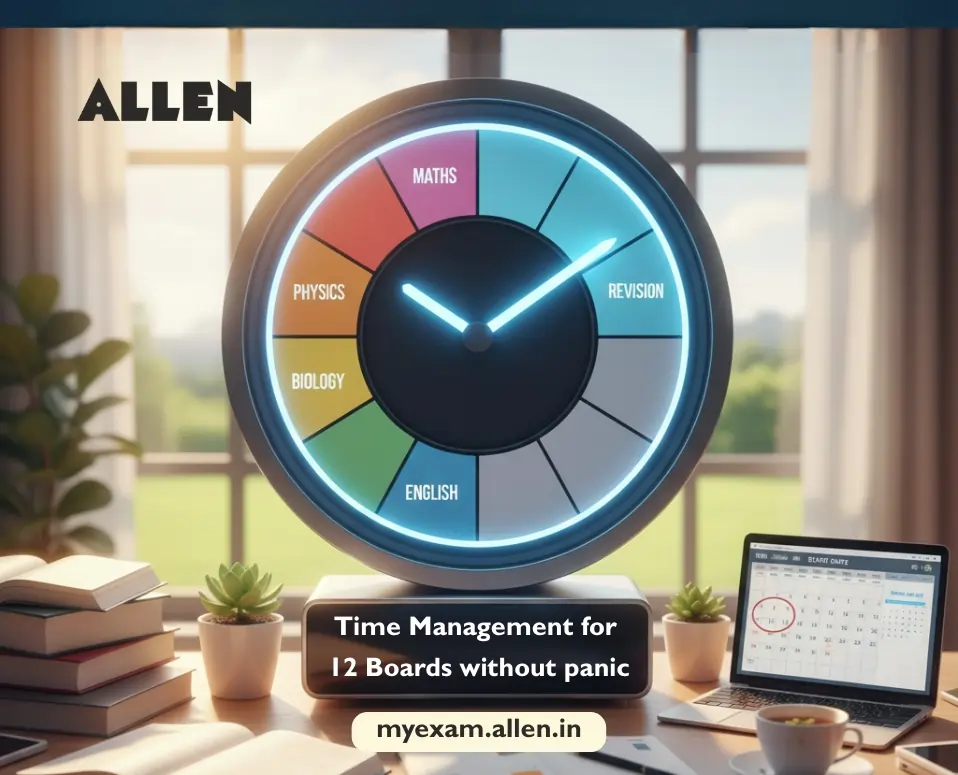
The Class 12 board exams are a crucial juncture in every student’s life. They’re not just a test of marks, but also a test of patience, discipline, and time management. Students often feel nervous just by hearing the exam, disrupting their regular study routine.

However, with the right strategy and balanced time management, excellent results can be achieved without any stress. In this article, we’ll explore how to manage time while preparing for the Class 12 board exams so that studying is effective and the mind remains calm.
Setting Clear Goals Is the First Step to Success
Time management begins with setting clear goals. When students determine how many marks they want to score and which subjects they need to work on, their focus becomes clear. For example, students from any stream, whether science, commerce, or arts, should identify their weak and strong subjects.
If they struggle with math or accounting, it’s important to allocate extra time for that subject. Writing goals and posting them on the wall and looking at them daily maintains motivation and gives direction to your studies.
Creating and Following a Study Plan
A well-organized study plan is the backbone of time management. A study schedule should be prepared for the day, week, and month.
Studying difficult subjects in the morning is more beneficial, as the mind is fresh and focused. Lighter topics can be revised in the afternoon or evening.
Taking a short break of 5 to 10 minutes after every 45 to 60 minutes of study helps keep the mind from getting tired and maintaining productivity. It’s important to be realistic when planning so that goals don’t seem unrealistic and increase anxiety.
Focus on the Syllabus and Previous Years’ Question Papers
When preparing for the Class 12 board exam, it’s crucial to understand the entire syllabus. Keep a copy of the syllabus handy and mark each chapter as you complete it.
This makes it easier to assess your progress. Solving previous years’ question papers helps you understand the exam pattern and important topics.
This also helps practice time management, as students develop the habit of completing papers within the allotted time. Taking mock tests boosts confidence and reduces exam day anxiety.
Staying Away From Digital Distractions
Mobile phones and social media have become major time-suckers these days. Checking notifications repeatedly while studying can be distracting and disrupt the study process.
Therefore, it’s best to keep your phone on silent mode or in another room while studying. If studying online, only use essential websites or apps. Check social media only during designated times to avoid wasting valuable study time.
Regular Revision Builds a Stronger Grip
Simply reading new material isn’t enough; regular revision of already learned material is equally important. Set aside one day a week solely for revision. Making short notes and revising important formulas or definitions by writing them down strengthens memory.
Revising brief notes is more beneficial than studying the entire syllabus at the last minute before the exam. This boosts confidence and brings stability to the mind.
Maintaining a Balance between Health and Sleep
Students often cut back on sleep during exams, which proves detrimental in the long run. Adequate sleep refreshes the mind and improves memory.
A balanced diet and light exercise are equally important. A healthy body will keep the mind calm and focus on studies. To avoid anxiety, practicing deep breathing and meditating for a while can also be beneficial.
The Importance of Self-Confidence and Positive Thinking
Time management is effective only when students believe in themselves. Constantly thinking about the syllabus being too large or the time being too short increases stress.
Instead, one should think that every goal can be achieved with regular effort. Positive thinking and self-confidence reduce the pressure of studies. Maintaining communication with family and teachers also helps maintain mental balance.
Balanced Efforts Lead to Success
Preparing for the Class 12 board exam without anxiety is possible if proper time management is adopted. Clear goals, a systematic study plan, regular revision, staying away from digital distractions, and a healthy lifestyle are the keys to success.

Exams are a part of life, not the whole of it. If students prepare with discipline and a positive attitude, they can not only score well but also move forward into their future with confidence.
Recommended Read:-
- A Winning Daily Routine for JEE Success
- Preparation Strategy for JEE and NEET-UG
- Study Hacks of the Toppers – Key to Success
- Tips for Students to Build a Strong Foundation
- Tips To Boost NEET UG Scores: A Comprehensive Guide
- Benefits of Daily Routine for Success in JEE and NEET
- NEET-UG 2024 Examination – Everything You Need To Know
- Tips to Overcome Procrastination in JEE and NEET Preparation
- Tips To Avoid Stress & Anxiety in JEE and NEET UG Preparation
- Nurturing Positive Mindset During JEE and NEET-UG Preparation
- Tips To Improve Concentration For JEE and NEET UG Preparation
- The Ultimate Guide To Acing NEET-UG: Best Preparation Strategy
- Avoid 10 Common Mistakes During JEE Main Preparation For Success
- Navigating NEET-UG: A Guide To Avoid Common Preparation Mistakes
- Cracking The Code: A Guide To Achieve 100 Percentile in JEE Main 2024
- Mastering Time Management: Tips for Competitive Examination Preparation
- Tips For Competitive Exam Aspirants to Keep Social Media Distractions At Bay